current location : home

Solar Ground Screw

Solar Ground Screw

It’s the best choice for someone to use ground screw to install the ground solar  mounting systems when the foundation is sand with clay.


Ground screw is effective foundation for ground mounted structure,it supply quick and easy constructions on stable foundation and make construction immediately.


We can supply various kinds of ground screws for the client,it is galvanized with high anti-corrosion and great,We design the ground screw with various helix for different soils to ensure safety of installation.


★How to install the ground screws ‌easily?


1.You can use the pile driver to install the ground screws,Please refer to the installation video:

https://www.youtube.com/watch?v=BYV97tdp4UM


You can rent a pile driver in local,then put the machine adapter in the pile driver to install the ground screws.it’s easy to install.


2.you can also use a portable driveto install the ground screws.


If you are interested in more detail information,please contact to us!

Email:sales9@landpowersolar.com


...

Carport Mounting Systems

Carport Mounting Systems

More and more people interesting in the carport mounting systems.

Our company Landpower solar keeps aluminium carport structure and steel carport structure,designed for bothresidentialand commercial installation,and waterproof design option.


Let me show you the two kinds of carport mounting systems:


1. Aluminium carport structure

Feature:

1)Material:Anodized Aluminium

2)Finishing:Anodized

3)Max Wind Load:46m/s

4)Tilt Angle:0-45°

5)Solar Orientation:Landscape or Portrait

6)Corrosion-Resistant


2. Steel carport structure

Feature:

1)Material:Steel Q235

2)Finishing:Hot galvanized

3)Max Wind Load:46m/s

4)Tilt Angle:0-45°

5)Solar Orientation:Landscape or Portrait

6)Corrosion-Resistant

7)Maximize Parking Space


▲Different of the two kinds structure:

1. The cost of aluminium carport structure is lower than the steel carport structure.

2. The volume of the steel carport structure is larger than the aluminium carport structure.

3. The maximize parking space of the steel carport structure is bigger than the aluminium carport structure.


No matter what structure you are interesting in,we will provide good design and price for you.


Email:sales9@landpowersolar.com


...

Solar PV Mounting Roof Hook

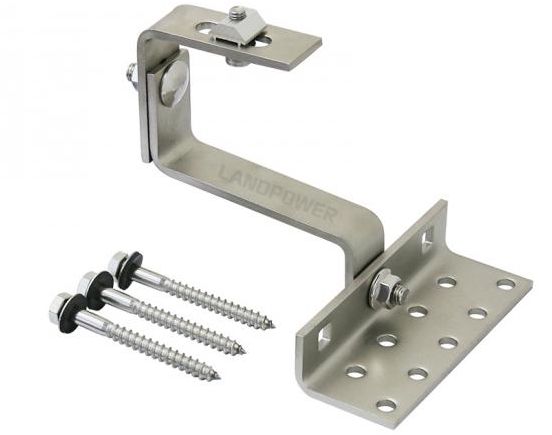
The solar panel roof hook is an important part of the solar photovoltaic module system. It is used to secure and support the solar panels, ensuring their stable installation on the roof. At the same time, it can adapt to the needs of different roof structures and improve the installation efficiency and stability of solar panels.

This roof hook for tile roofs is one of the solar panel roof hook products. Its base model comes with 1 bolt, 1 Tmodule and 3 screws. It can also be made adjustable. Pantile Adjustable Roof Hook is flexible in adjustment both in height and width, Pantile adjustable roof hook is flexible in adjustment both in height and width, two individual adjustable part in height and one in width, which make them work in various pantile roof. And the material of the roof hook is sus304, equivalent to 1.4301 stainless steel. If you have the need, we can also customize this product according to your requirements.

SUS roof hooks have the following features:
1. Easy to install
2. High durability
3. Protect against extreme weather

4. Wide applicability

If you are interested in this kind of roof hook, please feel free to contact us. (sales7@landpowersolar.com)

...

Solar Color Steel Roof Mountings System Tips and Tricks

If you’re a Color Steel Roof Mountings enthusiast looking to harness the power of solar energy, you’ve come to the right place. Solar Color Steel Roof Mountings Systems offer an excellent way to maximize energy efficiency and reduce your carbon footprint. In this article, we’ll provide you with some valuable tips and tricks to help you make the most out of your solar installation.

1. Assess Your Roof’s Suitability

Before diving into the world of solar color steel roof mountings, it’s essential to assess whether your roof is suitable for installation. Check for any structural issues, shading from nearby trees or buildings, and consider the direction and pitch of your roof. Ideally, your roof should receive maximum sunlight exposure throughout the day for optimal energy generation.

2. Choose Quality Mounting Components

Investing in high-quality mounting components is crucial for the longevity and efficiency of your solar system. Look for components that are specifically designed for color steel roofs and are resistant to corrosion. Stainless steel or aluminum brackets, rails, and clamps are excellent choices as they offer durability and weather resistance.

3. Optimize Panel Placement

Proper panel placement is key to achieving maximum solar energy production. Ensure that panels are installed with the correct tilt and orientation to capture the most sunlight. For color steel roofs, a popular mounting option is the rail-based system. Make sure the panels are securely fastened to the rails to prevent any potential damage caused by strong winds or adverse weather conditions.

4. Seek Professional Installation

While DIY installation can be tempting, it’s always advisable to seek professional assistance. Solar installation professionals have the expertise and knowledge to ensure that your color steel roof mountings system is installed safely and correctly, complying with local regulations and best practices. This will provide you with peace of mind and help optimize the performance of your solar system.

5. Regular Cleaning and Maintenance

To maintain the efficiency of your solar panels, regular cleaning and maintenance are essential. Keep the panels free from dirt, debris, and any accumulated snow during the winter months. Inspect the mounting components for any signs of damage or wear. Consult the manufacturer’s guidelines or reach out to your solar installer for specific cleaning recommendations.

6. Monitor Performance

Monitoring the performance of your solar system is crucial to identify any potential issues or inefficiencies. Look for online monitoring tools or apps provided by your solar provider that allow you to track your system’s performance in real-time. This will help you identify any performance dips and take timely action to maintain optimal energy production.

Conclusion

With the right approach and proper maintenance, a solar color steel roof mountings system can provide you with clean and sustainable energy for years to come. By assessing your roof, choosing quality components, optimizing panel placement, seeking professional installation, performing regular cleaning and maintenance, and monitoring performance, you’ll be well on your way to reaping the full benefits of solar energy.

Remember, choosing solar is not just an investment in your own energy independence but also in the sustainability of our planet. So go ahead, embrace solar color steel roof mountings, and contribute to a greener future.

...

Aluminum Solar Panel End Clamps Enhancing Your Solar Panel Installation

As the popularity of solar energy continues to rise, more and more homeowners and businesses are investing in solar panel installations. To ensure the durability and stability of your solar panel system, it is crucial to select high-quality mounting components. One such essential component is the aluminum solar panel end clamp, specifically designed for photovoltaic (PV) installations.

Why Use Aluminum Solar Panel End Clamps?

1. Securely Holds Panels in Place

The primary function of an aluminum solar panel end clamp is to securely hold solar panels in position on the mounting rails. These clamps ensure that panels remain firmly connected, even during extreme weather conditions such as high winds or heavy snowfall. With their excellent gripping power, these end clamps significantly reduce the possibility of panel slippage or detachment.

2. Easy Installation and Adjustment

Aluminum solar panel end clamps are designed for convenient installation and adjustment. They feature user-friendly designs that facilitate quick and hassle-free mounting onto the rails. Moreover, these clamps allow for easy panel repositioning or replacement without causing any damage.

3. Durability and Corrosion Resistance

The use of aluminum as the primary material for these end clamps offers exceptional durability and corrosion resistance. Aluminum is particularly suitable for outdoor applications due to its lightweight nature and natural resistance to rust or oxidation. By choosing aluminum solar panel end clamps, you ensure that your system remains reliable and long-lasting.

4. Compatibility with Various Mounting Systems

Whether you opt for a roof-mounted or ground-mounted solar panel installation, aluminum solar panel end clamps provide versatility and compatibility. These clamps can be used with different types of mounting systems, including rails and frames, making them a versatile choice for both residential and commercial projects.

5. Enhanced Aesthetic Appeal

In addition to their functional benefits, aluminum solar panel end clamps contribute to the overall aesthetic appeal of your solar panel array. They provide a sleek and uniform appearance by securely fastening the panels to the rails, creating a visually pleasing and professional-looking installation.

Choose Photovaltaic Aluminum Solar Panel End Clamps for Optimum Performance

When searching for top-quality aluminum solar panel end clamps, consider Photovaltaic (PV) Aluminum Solar Panel End Clamps. With their exceptional design and manufacturing standards, these clamps guarantee optimum performance and reliability.

Make sure you select the right end clamps for your solar panel installation to ensure stability, durability, and peace of mind. By investing in high-quality mounting components such as aluminum solar panel end clamps, you can maximize the efficiency of your solar panel system and embrace the benefits of clean, renewable energy.

...

Beginner's Guide to Using Aluminum Solar Panel PV Mounting Rails

When it comes to installing solar panels, one crucial component that ensures their stability and efficiency is the mounting system. Among the various options available, aluminum solar panel PV mounting rails are becoming increasingly popular due to their durability and versatility. This step-by-step guide will walk you through the process of using aluminum mounting rails for your solar panel installation, even if you have no prior experience.

Step 1: Gather the Necessary Tools and Materials

Before you begin, make sure you have all the tools and materials you’ll need. These may include:

  • Aluminum PV mounting rails (measured according to your specific installation requirements)

  • Mounting brackets or clamps

  • Stainless steel screws

  • Hex wrench or drill/driver

  • Tape measure

  • Level

  • Pencil or marker

  • Safety goggles

Step 2: Plan Your Solar Panel Array

Determine the number and arrangement of solar panels you want to install. Consider factors such as available space, sunlight exposure, shading, and local building codes. Sketch out a layout plan on paper or use a computer program to visualize the array arrangement.

Step 3: Mark the Locations for Mounting Rails

Using a tape measure, mark the locations on your roof or ground where the solar panels will be installed. Ensure that each marking is accurate and aligned with your layout plan. Use a level to ensure the markings are perfectly horizontal or angled, depending on your installation requirements.

Step 4: Install the Mounting Brackets or Clamps

Attach the mounting brackets or clamps to the marked locations using stainless steel screws. These brackets will hold the aluminum mounting rails in place. Ensure they are securely fastened to provide a stable foundation for your solar panels.

Step 5: Attach the Aluminum Mounting Rails

Place the aluminum mounting rails onto the installed brackets or clamps. Align the rails parallel to each other, ensuring they are level and straight. Secure the rails to the brackets using the provided screws and a hex wrench or drill/driver. Double-check the alignment and tightness of each rail to ensure their proper installation.

Step 6: Mount the Solar Panels

Carefully place the solar panels onto the installed aluminum rails. Align and attach each panel securely to the rails according to the manufacturer’s instructions. Take into account the recommended distances between panels to optimize their performance and airflow.

Step 7: Check for Stability and Alignment

After mounting all the solar panels, inspect the entire array for stability and alignment. Ensure there is no wobbling or misalignment that could affect the panels’ functionality. Use a level to check the horizontal and vertical alignment of the panels, making any necessary adjustments.

Step 8: Test the System

Before connecting the solar panels to your electrical system, it’s crucial to test the system for functionality and safety. Consult a licensed electrician or follow the instructions provided by the manufacturer for proper testing procedures.

Congratulations! You have successfully installed your solar panel system using aluminum PV mounting rails. Enjoy the benefits of clean, renewable energy while reducing your carbon footprint.

Remember, if you encounter any difficulties during the installation process, consult professional assistance to ensure a safe and efficient solar panel installation.

...

Can Solar Metal Roof Mounting Revolutionize Renewable Energy?

In the quest for sustainable and renewable energy sources, solar power has emerged as a promising solution. As technology advances, new and innovative ways to harness the power of sunlight are being developed. One such groundbreaking approach is solar metal roof mounting, which aims to maximize the efficiency and convenience of solar installations.

Traditional solar panel installations often require extensive groundwork, including the installation of racks and frames. However, solar metal roof mounting offers a simpler and more efficient solution. By utilizing specially designed mini rail systems, solar panels can be securely attached directly to the metal roof, eliminating the need for additional structural support.

One notable advancement in this field is the Solar Mini Rail Solution. This innovative system allows for quick and easy installation of solar panels on metal roofs without compromising the integrity of the roof itself. The mini rail solution provides a secure and streamlined framework while minimizing the impact on the overall aesthetics of the building.

For those with tin roofs, the Solar Tin Roof Mini Rail Solution is an ideal choice. This specialized mounting system is designed specifically for tin roofs, ensuring a secure and reliable attachment of solar panels. The mini rail solution provides flexibility, allowing for easy adjustment and maintenance of the solar panel angle to optimize energy production.

Another important consideration in solar panel installations is the structural integrity of the mounting system. With the solar short rail racking structure, stability and durability are prioritized. This system is engineered to withstand harsh weather conditions, ensuring that the solar panels remain securely in place for years to come.

The benefits of solar metal roof mounting go beyond convenience and aesthetics. By utilizing this approach, businesses and homeowners can significantly reduce their reliance on conventional energy sources. Moreover, the use of solar power contributes to a greener environment by reducing carbon emissions and promoting sustainability.

As the demand for renewable energy continues to grow, the development of innovative solutions like solar metal roof mounting becomes crucial. These advancements facilitate the widespread adoption of solar power and pave the way for a more sustainable future.

In conclusion, can solar metal roof mounting revolutionize renewable energy? The answer is a resounding yes. With its simplicity, efficiency, and environmental advantages, this approach holds tremendous potential for transforming the way we harness solar power. By embracing solar metal roof mounting, we can step closer to achieving a cleaner and more sustainable energy landscape for generations to come.

...

Low Voltage 51.2V 100Ah S51100 Rack Module Lithium Battery Home Energy Storage Systems

The evolution of lithium battery technology has revolutionized the way we store and use energy. Among the various forms and configurations available, the 51.2V lithium ion battery stands out as a versatile and high-performance option. Specifically, the 51.2V 100Ah S51100 rack module lithium battery offers exceptional capabilities for home energy storage systems.

With a capacity of 100Ah, this lithium battery module boasts a significant energy storage capability. The 51.2V voltage range ensures compatibility with a wide range of devices and applications, while the low voltage design enhances safety and efficiency. Homeowners can rely on this battery to power their energy requirements, whether it’s lighting, appliances, or charging electronic devices.

One of the key advantages of the S51100 rack module lithium battery is its scalability. By employing parallel connections, multiple batteries can be connected together to form larger systems with increased capacity. This allows for flexibility in meeting varying energy demands, making it suitable for both small residences and larger properties.

The S51100 battery’s lithium-ion chemistry provides a higher energy density compared to traditional lead-acid batteries, resulting in a compact and lightweight design. This makes installation and maintenance hassle-free, especially when space is limited. Additionally, the long cycle life of lithium-ion batteries ensures prolonged usage before requiring replacements, providing economic benefits in the long run.

Home energy storage systems powered by 51.2V lithium ion batteries offer numerous advantages over conventional grid-dependent setups. They enable homeowners to have a reliable backup power source during outages, reducing dependence on the main power grid. Furthermore, they allow for efficient use of renewable energy sources, such as solar panels, by storing excess energy for later consumption.

In conclusion, the low voltage 51.2V 100Ah S51100 rack module lithium battery stands as an exceptional solution for home energy storage systems. Its scalability, compactness, and high-performance characteristics make it an ideal choice for homeowners seeking reliable and efficient energy management. Embracing this advanced lithium battery technology brings us closer to a sustainable and independent energy future.

...

Choosing the Right Cables for Your Solar Energy System

If you’re considering harnessing the power of the sun with a solar energy system, there are a few key components you need to know about. One crucial aspect is the selection of cables, which play a vital role in connecting solar panels, inverters, and other components within the system. In this article, we will focus on some commonly used cables in solar installations: PV cables, DC cables, 4mm2 solar cables, 6mm Single Core Solar Cables, and Single Core PV Cables.

1. PV cables:

PV cables are specifically designed for solar applications and are used to connect solar panels to other system components. These cables carry direct current (DC) power generated by the panels, ensuring efficient electricity transmission with minimal power loss. PV cables are known for their weather resistance and robust construction, making them a reliable choice for outdoor solar installations.

2. DC cables:

DC cables are used to connect various components of the solar energy system such as solar panels, charge controllers, and batteries. They are responsible for transmitting the DC power generated by the panels to the charge controller and battery bank. These cables are built to handle the high currents produced by solar panels, ensuring safe and efficient energy transfer.

3. 4mm2 solar cables:

4mm2 solar cables are a popular choice for small to medium-sized residential solar systems. With their appropriate conductor size, these cables can handle the moderate currents produced by solar panels, ensuring reliable power transmission. Their compact size and flexibility make them easier to install, saving both time and effort during the setup process.

4. 6mm Single Core Solar Cables:

6mm Single Core Solar Cables are commonly used in larger solar systems, including commercial and industrial applications. With increased conductor size, these cables are capable of handling higher currents, making them suitable for larger solar arrays. The single-core design simplifies installation while maintaining the necessary power transmission capacity for demanding solar projects.

5. Single core PV cables:

Single-core PV cables are designed for applications that require larger conductor diameters to minimize voltage drop over longer distances. These cables are commonly used to connect solar panels to the inverter or combiner box. With their robust construction and high-performance insulation, single-core PV cables ensure efficient power transmission and reduce energy loss.

When selecting cables for your solar energy system, it is essential to consider factors such as the size of your system, the distance between components, and the expected current load. Consulting with a professional solar installer can help you determine the most suitable cables for your specific needs.

Remember, investing in high-quality cables is crucial to ensure the safety and longevity of your solar energy system. Properly chosen and well-installed cables will help maximize the efficiency of your solar installation, giving you peace of mind and a greener energy future.

...
Flat roof solar mounting system (new)!

Flat roof solar mounting system (new)!


In the past, the dimension of solar panel on the market was relatively small, such as 1722*1134*30mm, etc.


With the development of the market, the dimension of the solar panel is getting larger and larger, for example: 2279*1134*35mm. The previous installation method people use clamps to fix and merge the short sides of the solar panel. Many installers found that the distance between triangular is too big ,the panel don't have enough support, if the wind speed higher, the middle part of the solar panel will float up and down (Pic 01) , which will reduce the service life of the solar panels.

Picture(01)


After communicating with our customers, we discovered a new installation method, which is to change the original short-side connection to a long-side connection. This greatly improves the stability of the solar mounting structure and also plays a role in protecting the solar panels.(as shown pic 02)

Picture (02)


This new installation method is affirmed by more and more customers. If you are interesting in the item, don't hesitate to contact to us. Looking forward to providing you with better prices and services.


Email:sales9@landpowersolar.com


...