What is the definition and difference between distributed photovoltaic and building integrated photovoltaic (BIPV)?
When it comes to photovoltaic (photovoltaic) systems, distributed photovoltaics and building-integrated photovoltaics (BIPV) are two related but distinct concepts. Here are their definitions and differences:
Distributed Photovoltaics:
Definition: Distributed photovoltaic refers to a photovoltaic system that installs solar photovoltaic panels at scattered locations in buildings, facilities or areas to generate electricity and meet local electricity demand.
Features:
a. Decentralized layout: Photovoltaic panels are installed in multiple locations, which can be the roof, wall or ground of a building, or the covering of a facility.
b. Grid connection: The distributed photovoltaic system is connected to the main power network through the grid, which can inject the power generation of multiple systems into the grid, and can also obtain supplementary power from the grid.
c. Satisfaction of electricity demand: distributed photovoltaic systems are designed to meet local electricity demand and reduce dependence on traditional power supply.
d. Scalability: Since the system is dispersed in multiple locations, the distributed photovoltaic system can be expanded as needed to accommodate power generation of different scales and demands.
Building Integrated Photovoltaics (BIPV):
Definition: Building-integrated photovoltaics is a photovoltaic system that integrates solar photovoltaic modules into the design and construction of the building itself to achieve simultaneous power generation and building functions.
Features:
a. Building structure: The photovoltaic modules of the BIPV system are designed to be combined with the building's exterior walls, roofs, windows, etc., replacing traditional building materials such as bricks, tiles, and glass.
b. Integrated design: The design of BIPV system takes into account the appearance, structure and functional requirements of the building to achieve beautiful and reliable photovoltaic power generation.
c. Dual function: In addition to power generation, BIPV system can also provide heat insulation, sunshade, protection and decoration functions of buildings.
d. Building integration: The photovoltaic modules of the BIPV system are tightly integrated with other systems of the building (such as the power system and ventilation system) to achieve efficient energy utilization.
the difference:
Installation location: Distributed photovoltaics can be installed in various locations of the building, including roofs, walls, and ground, while the photovoltaic modules of the BIPV system are designed and installed as part of the building.
Purpose and function: Distributed photovoltaics are designed to meet local electricity demand and inject the power generation of multiple systems into the grid, while BIPV not only generates electricity, but also has the functions of buildings, such as heat insulation, sunshade and decoration.
Design considerations: The BIPV system needs to match the appearance, structure and functional requirements of the building to achieve an integrated design, while the design of distributed photovoltaics pays more attention to power generation efficiency and system scalability.
Installation and integration: The installation of distributed photovoltaics is relatively simple, and photovoltaic modules can be added to existing buildings, while BIPV requires the integration of photovoltaic modules during the design and construction of buildings.
To sum up, distributed photovoltaics focus on power generation and meet electricity demand, which is achieved by installing photovoltaic systems in different locations; while BIPV systems are integrated into the design and construction of buildings, with both power generation and building functions, to achieve integrated photovoltaic solutions.
current location : home
What is the definition and difference between distributed photovoltaic and building integrated photovoltaic (BIPV)?
Investment cost and rate of return of distributed photovoltaics?
Investment cost and rate of return of distributed photovoltaics?
The investment cost and rate of return of distributed photovoltaics can vary due to factors such as project scale, location, type of photovoltaic modules, installation method, and electricity price policy. The following are some reference information on the investment cost and return rate of distributed photovoltaic projects in general:
1. Investment cost
Photovoltaic modules: Photovoltaic modules are the core components of distributed photovoltaic systems, and their prices depend on the type and brand. In the investment cost, photovoltaic modules usually occupy a large proportion.
Inverter: The inverter converts the direct current generated by the distributed photovoltaic module into alternating current, and the price of the inverter is also an important part of the investment cost.
Structural support and installation: The support and labor installation costs for installing photovoltaic modules are also included in the investment cost.
Cables and electrical equipment: Cable routing and electrical equipment are an essential part of the system and part of the investment cost.
System design and engineering: including system design and engineering costs.
2. Income and rate of return
Power generation income: Distributed photovoltaic systems generate income by injecting electricity into the grid or providing electricity for their own electricity consumption. Benefits are related to solar resources, system performance, and electricity price policies.
Saving electricity bills: Distributed photovoltaic systems can reduce electricity purchased from the grid, thereby saving electricity bills.
Energy subsidies: In some regions, the government may provide subsidies or incentives for solar photovoltaic power generation, which can also be a source of income. The rate of return can be assessed by calculating the payback period. ROI refers to the time required to pay back the investment cost, usually calculated in years. A shorter payback period means a higher rate of return.
It should be noted that the investment cost and rate of return of distributed photovoltaic projects will be affected by many factors, including energy policy, electricity price policy, solar resource conditions, project scale, component quality, etc. Before investing in distributed photovoltaic projects, it is best to conduct detailed economic analysis and feasibility studies to fully evaluate the potential returns and risks of the project.
What benefits does photovoltaic power generation bring us?
Seven major changes that photovoltaic power generation has brought us
In recent years, the government has developed and utilized renewable resources such as solar energy on a large scale, cultivating the new energy industry as a strategic leading industry for a new round of economic growth, and promoting the construction of new energy projects. So, what opportunities for wealth creation does photovoltaics bring us, and what changes will it bring us? Sunpal will take you to see it together.
wealth creation opportunity
1. Industrial and commercial photovoltaic roofs
Today, a group of qualified industrial and commercial enterprises have installed distributed photovoltaic power generation systems on their roofs. Due to the need to control smog, the country will introduce relevant policies in more cities in the future to allow the installation of photovoltaic new energy systems on the roofs of industrial and commercial facilities and public facilities.
2. Carbon trading starts
Due to the needs of environmental protection, the country may restrict carbon emissions through carbon emission taxes. At this time, clean new energy photovoltaics have become the darling. Individuals or enterprises can join the carbon trading system by installing photovoltaic power plants, and get more by selling green electricity. income.
3. Low-carbon products are more popular
When a product is labeled with a green label for electricity, similar to foods with calories marked, and all products are marked with how much electricity was used to produce the product and how much carbon dioxide is produced, people will choose similar products with less carbon emissions to promote environmental protection.
4. Rural health benefits
The popularization of distributed photovoltaics can play a very good role in environmental protection. When various facilities in rural areas can use photovoltaics, the ecological environment in rural areas will also be greatly improved.
Photovoltaic changes every aspect of life
1. Fashion and beauty become the focus
The solar power system is equipped with beautiful buildings, elegant colors, fashion, and the overall effect is beautiful and atmospheric.
2. Energy saving, environmental protection and smog reduction
Photovoltaic power generation system is a safe, green and sustainable clean energy, which not only saves energy but also reduces carbon dioxide emissions, and the effect of planting trees can be achieved by generating electricity every day.
3. Heat insulation and cooling in summer
The solar cell module absorbs a wide range of spectra and can absorb solar radiation to a large extent, thus playing a good heat insulation effect.
What is the Difference Between Solar Street Lights and Normal Street Lights?
In the realm of street lighting, the evolution of technology has led to the emergence of solar-powered alternatives alongside traditional grid-connected lights. This development raises the pertinent question: what sets solar street lights apart from their conventional counterparts? Let’s delve into the distinctions and advantages of each.
1. Power Source:
Solar Street Lights: These utilize photovoltaic panels to harness sunlight and convert it into electricity. This means they operate independently of the electrical grid, relying solely on solar energy. High efficiency small solar panels play a crucial role here, efficiently capturing sunlight and transforming it into usable power.
Normal Street Lights: Conversely, traditional street lights are powered by electricity from the grid. They require a constant connection to the power supply network, making them dependent on infrastructure and susceptible to power outages.
2. Environmental Impact:
Solar Street Lights: By harnessing renewable energy from the sun, these lights have a significantly lower carbon footprint compared to grid-powered lights. They contribute to reducing greenhouse gas emissions and mitigating environmental degradation.
Normal Street Lights: Grid-connected lights rely on non-renewable energy sources such as coal or natural gas, leading to higher emissions and environmental harm.
3. Installation and Maintenance:
Solar Street Lights: Installation of solar street lights is often simpler and more cost-effective since they do not require extensive wiring or trenching for power connections. Additionally, their off-grid nature means they can be conveniently portable, making them suitable for remote or temporary lighting needs. Small size solar panels off-grid power facilitates flexibility in placement and installation.
Normal Street Lights: These lights necessitate complex installation procedures involving trenching for underground wiring and connection to the electrical grid. Maintenance also requires periodic checks and repairs to the electrical components.
4. Cost Efficiency:
Solar Street Lights: While the initial investment for solar street lights may be higher due to the cost of photovoltaic panels and batteries, they offer long-term cost savings by eliminating electricity bills and reducing maintenance expenses.
Normal Street Lights: Although traditional street lights may have lower upfront costs, they incur ongoing expenses for electricity consumption and maintenance, making them less cost-effective in the long run.
The key disparities between solar street lights and normal street lights lie in their power source, environmental impact, installation, maintenance, and cost efficiency. Solar street lights, powered by conveniently portable small solar panels, offer a sustainable and independent lighting solution with minimal environmental footprint and long-term economic benefits. As the world embraces renewable energy technologies, solar street lights stand out as a beacon of innovation in the realm of urban illumination.
...U Plus Series Pitched Roof Mounting System
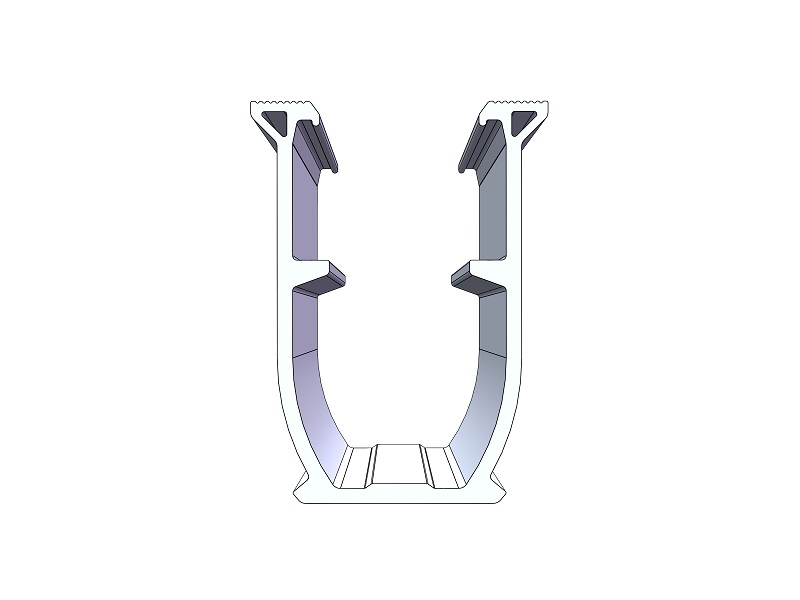
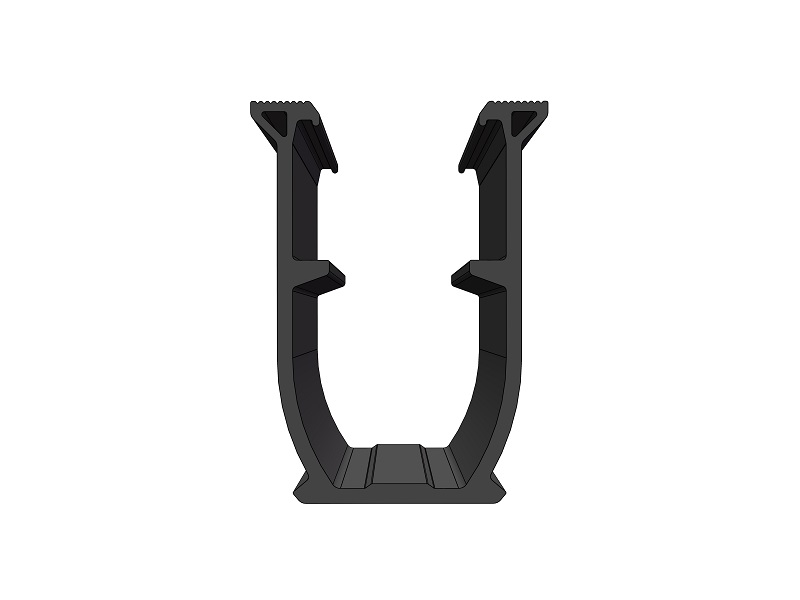
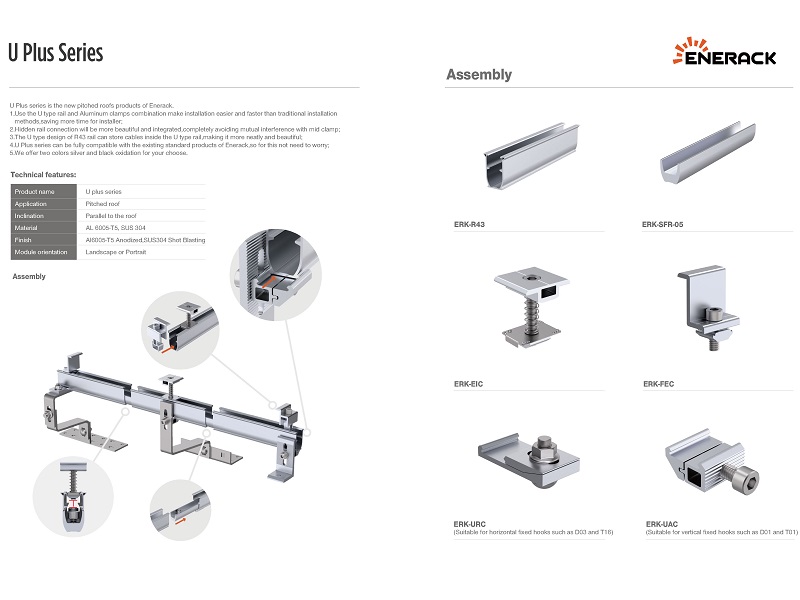
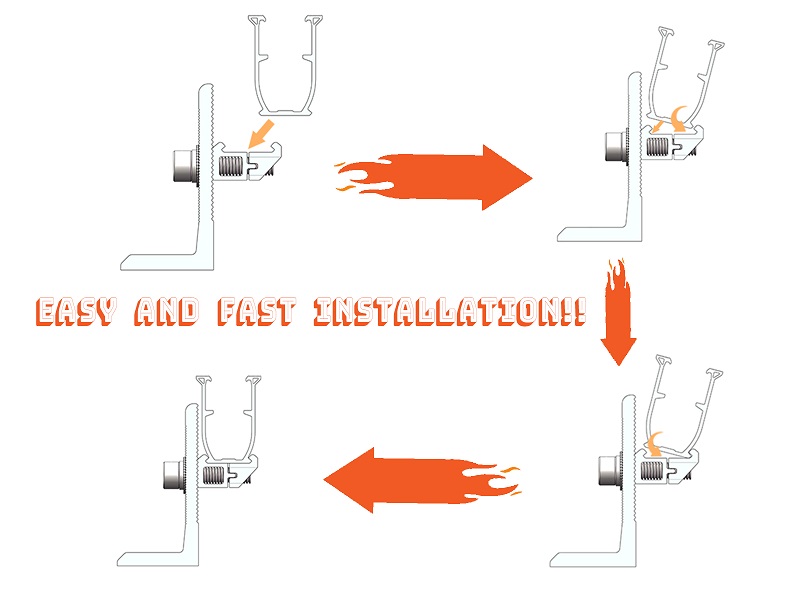
U Plus series is the new pitched roof mounting system products of Enerack.
1.Use the U type rail and Aluminum clamps combination make installation easier and faster than traditional installation methods,saving more time for installer;
2.Hidden rail connection will be more beautiful and integrated,completely avoiding mutual interference with mid clamp;
3.The U type design of R43 rail can store cables inside the U type rail,making it more neatly and beautiful;
4.U Plus series can be fully compatible with the existing standard products of Enerack,so for this not need to worry;
5.We offer two colors silver and black oxidation for your choose.
Click here for details U plus solar mounting systems.
...
What are the advantages of solar carports?
Solar carports are a rapidly growing trend in the renewable energy and transportation sectors, offering numerous advantages for both individuals and businesses. Enerack is professional solar carport mounting system manufacturer, our PV carport mounting system offers a simplified and economical solutions that provides a perfect combination of shade parking and solar power generation as well as electric vehicle charging. It applied for family parking, commercial parking, awnings and even bus stops. A residential solar carport is more than just a car shelter with a PV system. Solar carports are highly versatile and provide many opportunities to reduce carbon footprint as well as energy costs.
Standard carport system
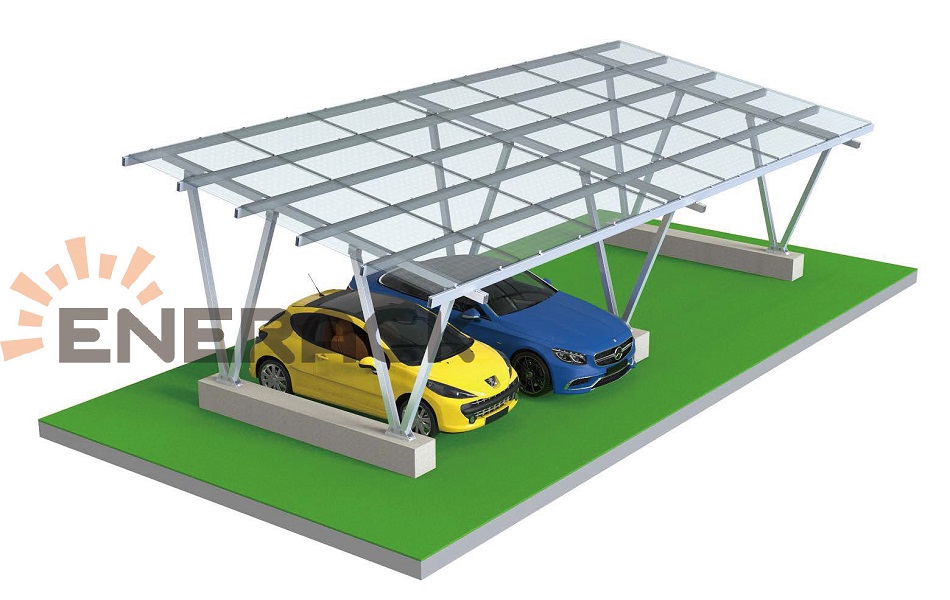
Here are some key advantages of solar carports:
1. Clean, Renewable Energy Generation: Solar carports harness the power of the sun to generate clean, renewable energy. By installing solar panels on carports, ample energy can be produced while reducing reliance on fossil fuels and decreasing carbon emissions.
2. Shaded Parking and Weather Protection: Solar carports provide shade for parked vehicles, protecting them from direct sunlight, rain, hail, and other weather elements. This helps preserve the condition and lifespan of vehicles, minimizing the need for costly maintenance and repairs.
3. Cost Savings: Solar carports offer significant cost savings in multiple ways. Firstly, they generate electricity that can offset or even eliminate utility bills. By utilizing the solar energy generated, car owners can reduce their reliance on the grid and save money in the long run. Additionally, solar carports can also provide covered parking, which can save vehicle owners money on expensive indoor parking fees.
4. Increased Property Value: Installing a solar carport can enhance the overall value of a property. Solar-powered amenities are highly desirable among homebuyers and businesses alike, as they demonstrate a commitment to sustainability and reduced energy costs. This can lead to higher property resale values and attract environmentally conscious buyers.
5. Sustainable Branding and Marketing: For businesses, solar carports offer an opportunity to showcase their commitment to sustainability and environmental responsibility. By prominently displaying solar panels and promoting clean energy initiatives, companies can strengthen their brand image and attract environmentally conscious customers. This can enhance marketing efforts and differentiate businesses from competitors.
Solar carports provide a range of advantages, including clean energy generation, weather protection for vehicles, cost savings, increased property value, and sustainable branding opportunities. As the world continues to embrace renewable energy solutions, Enerack solar carports offer a practical and environmentally friendly option for both individuals and businesses.
Waterproof standard carport system
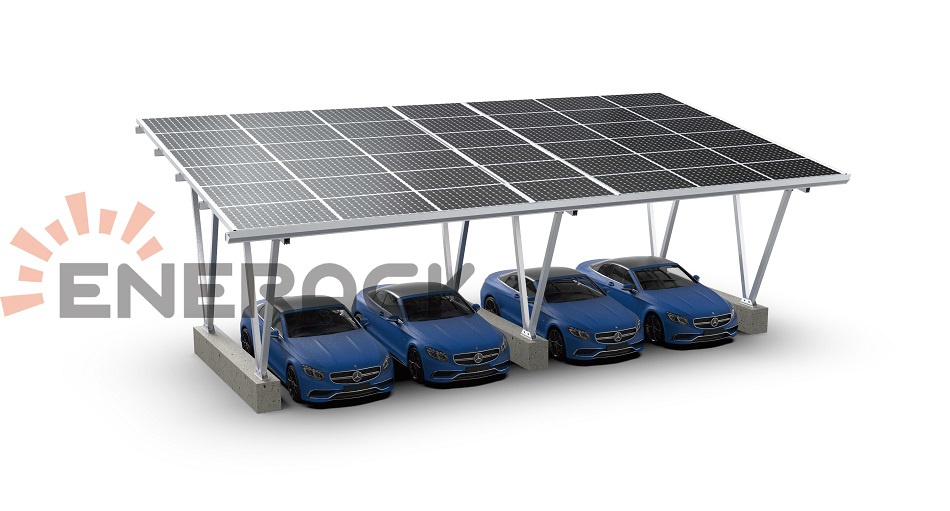
Exciting News! Construction Begins for 0.34MW Xiamen National Institute of Accounting Solar Power Project!
On March 27, 2024, C&D Inc (600153. SH) announced the official commencement of construction for the integrated project of the 0.34MW Xiamen National Institute of Accounting Distributed Photovoltaic Power Station and Charging Pile under C&D Emerging Energy Co., Ltd.
Located within the scenic Xiamen National Institute of Accounting, the project covers an area of 1650 square meters, including 450 square meters of roof area and 1200 square meters of carport area (BIPV). The project has a capacity of 0.34 megawatts. The power station consists of 586 pieces of 580W/panel high-efficiency monocrystalline silicon solar modules and 3 units of 125KW inverters, utilizing a 380V low-voltage grid connection distribution system. The project adopts the "self-generation for self-use" model, essentially achieving 100% self-consumption.
According to calculations, it is estimated that the average annual electricity generation after the completion of the project could reach 373,000 kWh, saving approximately 134 tons of standard coal per year and reducing carbon dioxide emissions by about 371 tons, thus demonstrating significant social, economic, and environmental benefits.
Xiamen National Institute of Accounting (a research institute directly under China's Ministry of Finance) is an important training base for high-level financial and accounting talents in China. It is the location of the "Belt and Road" Financial and Economic Development Research Center and ESG Research Center initiated by the Chinese government. It is a modern, intelligent, and landscaped training, teaching, and research institution with international standards, dedicated to promoting the concept of green energy and sustainable development.
By collaborating with Xiamen National Institute of Accounting, C&D Emerging Energy Co., Ltd responds to the national dual-carbon policy, fully utilizes roof resources and abundant solar energy resources for photovoltaic power generation, jointly undertaking the social responsibility of energy conservation and emission reduction, and establishing a positive corporate and university image.
The groundbreaking of the 0.34MW photovoltaic power station project at Xiamen National Institute of Accounting signifies C&D Emerging Energy Co., Ltd's firm step forward in the construction of distributed photovoltaic power stations. In the future, C&D Emerging Energy Co., Ltd will continue to delve into the investment and development of distributed photovoltaics and other new energy fields, making unremitting efforts to create a green living environment and contribute to the nation's goals of peak carbon emissions and carbon neutrality.
Located within the scenic Xiamen National Institute of Accounting, the project covers an area of 1650 square meters, including 450 square meters of roof area and 1200 square meters of carport area (BIPV). The project has a capacity of 0.34 megawatts. The power station consists of 586 pieces of 580W/panel high-efficiency monocrystalline silicon solar modules and 3 units of 125KW inverters, utilizing a 380V low-voltage grid connection distribution system. The project adopts the "self-generation for self-use" model, essentially achieving 100% self-consumption.
According to calculations, it is estimated that the average annual electricity generation after the completion of the project could reach 373,000 kWh, saving approximately 134 tons of standard coal per year and reducing carbon dioxide emissions by about 371 tons, thus demonstrating significant social, economic, and environmental benefits.
Xiamen National Institute of Accounting (a research institute directly under China's Ministry of Finance) is an important training base for high-level financial and accounting talents in China. It is the location of the "Belt and Road" Financial and Economic Development Research Center and ESG Research Center initiated by the Chinese government. It is a modern, intelligent, and landscaped training, teaching, and research institution with international standards, dedicated to promoting the concept of green energy and sustainable development.
By collaborating with Xiamen National Institute of Accounting, C&D Emerging Energy Co., Ltd responds to the national dual-carbon policy, fully utilizes roof resources and abundant solar energy resources for photovoltaic power generation, jointly undertaking the social responsibility of energy conservation and emission reduction and establishing a positive corporate and university image.
The groundbreaking of the 0.34MW photovoltaic power station project at Xiamen National Institute of Accounting signifies C&D Emerging Energy Co., Ltd.'s firm step forward in the construction of distributed photovoltaic power stations. In the future, C&D Emerging Energy Co., Ltd will continue to delve into the investment and development of distributed photovoltaics and other new energy fields, making unremitting efforts to create a green living environment and contribute to the nation's goals of peak carbon emissions and carbon neutrality.
...Unveiling SpolarPV's S-Elite 495W Solar Panel Durability and Efficiency Redefined
Introduction:
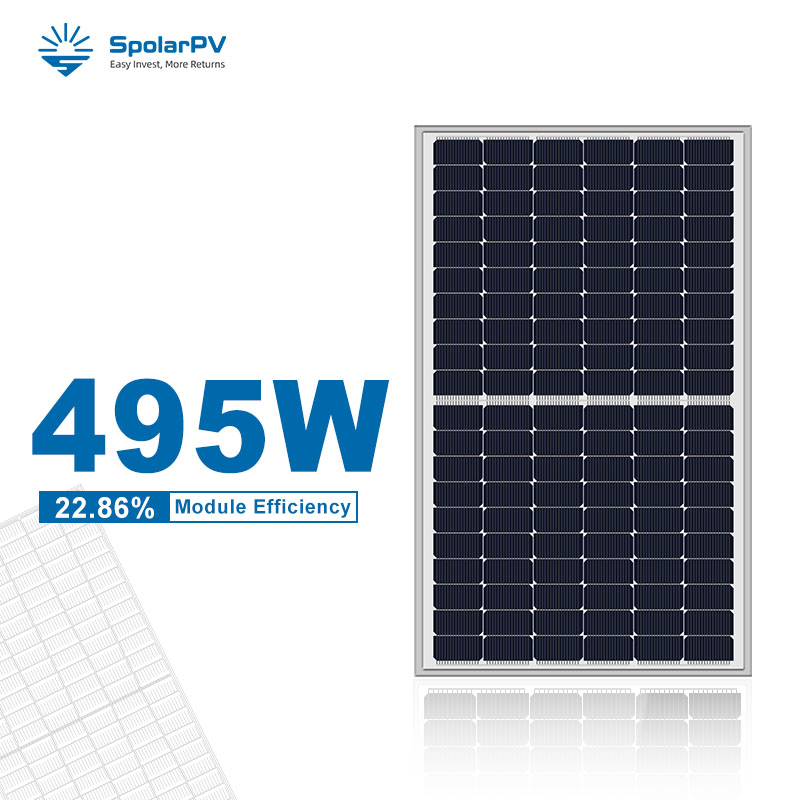
SpolarPV proudly introduces the latest addition to our S-Elite series – the S-Elite 495W Solar Panel. In this blog, we delve into the exceptional durability and efficiency of this cutting-edge solar solution.
Durability Against Extreme Environmental Conditions:
The S-Elite 495W Solar Panel is engineered to withstand the harshest environmental conditions with ease. Its robust design ensures durability against extreme weather, high mechanical loads, and even potential-induced degradation (PID), guaranteeing optimal performance and longevity.
Efficiency Beyond Expectations:
Powered by TOPCon (Tunnel Oxide Passivated Contact) technology and featuring 182mm PERC solar cells utilizing half-cut cell technology, the S-Elite 495W panel achieves an outstanding 22.86% conversion efficiency. This remarkable efficiency ensures maximum power generation, even in challenging conditions, making it a reliable choice for both residential and commercial applications.
Anti-Reflection Coating for Enhanced Performance:
Equipped with anti-reflection coating, the S-Elite 495W Solar Panel minimizes light reflection, optimizing energy absorption and performance. This feature ensures consistent and efficient energy production throughout its operational life.
Conclusion:
SpolarPV's S-Elite 495W Solar Panel sets a new standard in durability and efficiency, providing a reliable and sustainable energy solution for various applications. With its robust construction, high conversion efficiency, and resistance to extreme environmental conditions, this solar panel is poised to redefine the future of solar energy generation. Experience unmatched durability and efficiency with SpolarPV's S-Elite 495W Solar Panel today.
...
Residential Solar System
A residential solar system is a device that converts solar energy into electricity, providing clean and renewable energy for households. With the emphasis on environmental protection and sustainable development, more and more households are starting to install residential solar system.
The residential solar system consists of solar panels, inverters, batteries, controllers, etc. The solar panel collects solar energy and converts it into direct current energy. The inverter converts direct current into commonly used alternating current. The battery is used to store excess energy for emergency use, and the controller monitors and regulates the system.
The advantages of koodsun residential solar system are self-evident. Firstly, it can reduce dependence on traditional energy, reduce carbon emissions, and thus reduce negative impacts on the environment. Secondly, as solar energy is a renewable energy source, residential solar system can be used for a long time, greatly reducing the long-term cost of household energy. In addition, the installation and maintenance of residential solar system are also very simple, as it is only necessary to regularly clean the solar panels to keep them in good working condition at all times.
...
What is the difference between \"off-grid\" and \"grid-connected\" power generation systems?
According to the existing photovoltaic power generation projects on the market, combined with different application scenarios, solar photovoltaic power generation systems can be roughly divided into five types: grid-connected power generation systems, off-grid power generation systems, off-grid energy storage systems, and grid-connected energy storage systems and a variety of energy hybrid micro-grid systems.
And off-grid energy storage system
It is composed of photovoltaic modules, solar energy and off-grid integrated machine, battery (energy storage), load, etc. It is widely used in scenarios such as frequent power outages or photovoltaic self-use without surplus electricity, self-use electricity price is more expensive than on-grid electricity price, peak electricity price is more expensive than valley electricity price, etc.
The photovoltaic array converts solar energy into electrical energy under the condition of light, and supplies power to the load through the solar controller inverter integrated machine, and at the same time charges the battery; when there is no light, the battery supplies power to the solar controller inverter integrated machine. Then supply power to the AC load function. Dual mode switching to ensure power supply requirements.
Photovoltaic grid-connected energy storage system
It consists of photovoltaic modules, solar controllers, batteries, grid-connected inverters, current detection devices, loads, etc. It can increase the proportion of spontaneous self-use.
When the solar power is less than the load power, the system is powered by the solar power and the grid together. When the solar power is greater than the load power, the solar power supplies the load while storing the excess electricity through the inverter.
Microgrid system
A power distribution network composed of distributed power sources, loads, energy storage systems and control devices. The distributed energy can be converted into electrical energy on the spot, and then supplied to the local load nearby.
The microgrid system is an autonomous system capable of self-control, protection and management. It can not only be connected to the external power grid, but also can operate in isolation, which greatly solves the problem of distributed power grid connection and promotes the integration of distributed power The large-scale access of renewable energy is an efficient supply of multiple forms of energy for the load, and a smart grid system that realizes the active distribution network.
Secondly, let's talk about the difference between photovoltaic grid-connected and off-grid?
Photovoltaic grid-connected systems rely on the power grid and adopt the working mode of "spontaneous self-use, surplus electricity connected to the grid" or "full grid connection", while off-grid systems do not depend on the grid, relying on "storage while using" or "store first and use later". working mode.