current location : Home » categoires :
The Essential Guide to PLC Control Cabinets Components, Principles & Applications
The Essential Guide to PLC Control Cabinets Components, Principles & Applications
PLC (Programmable Logic Controller) control cabinets are common control devices in industrial automation, used to achieve automatic control of various mechanical and electrical equipment. This article will provide a detailed introduction to the components, application areas, overview, usage conditions, basic structure, working principle, and functional characteristics of PLC control cabinets.
一. Components of the PLC Control Cabinet:
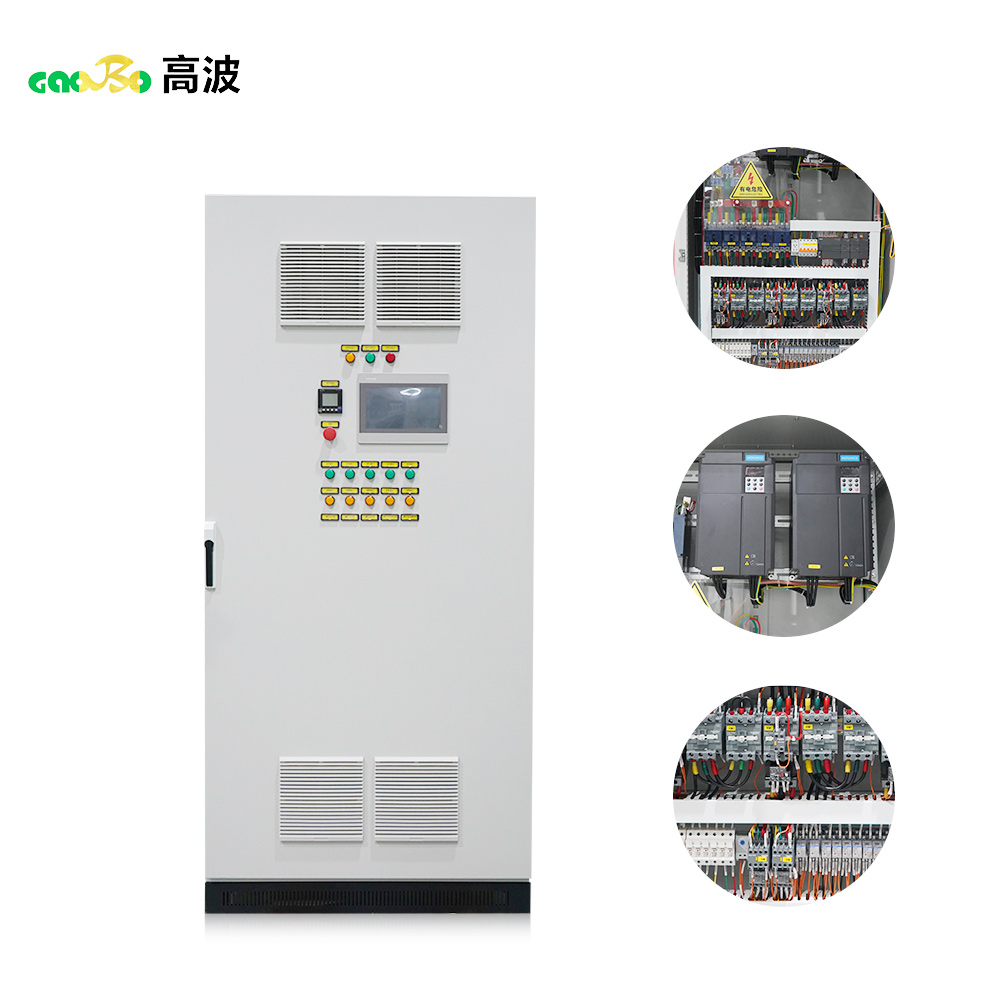
1. PLC main unit is the core component of the control cabinet, responsible for receiving input signals, processing logic operations, and outputting control signals.
2. Input Module: The input module receives signals from external devices such as sensors, buttons, and switches, and converts them into digital signals for processing by the PLC main unit.
3. Output Module: The output module converts the control signals processed by the PLC host into current, voltage, and other forms to drive actuators, relays, and other output devices.
4. Power Supply Module: The power supply module provides a stable power supply to the PLC host and other modules.
5. Communication Module: The communication module enables data exchange and communication between the PLC and other devices (such as a host computer or HMI).
6. Programming Port: The programming port is used to connect programming devices, such as programming cables and programming software, for editing and debugging the PLC program.
二. PLC Control Cabinet Application:
1. Production Line Control: Used to control various mechanical equipment on the production line to achieve automated production processes.
2. Machining: Used to control CNC machine tools, cutting machines, welding robots, and other equipment to achieve precise machining operations.
3. Energy Management: Used to monitor and control energy systems, such as power distribution, water treatment, and petrochemicals.
4. Intelligent Buildings: Used for building automation control, such as lighting, air conditioning, and security systems.
5. Logistics Systems: Used to control logistics equipment, such as conveyor belts, stacker cranes, and automated sorting systems.
三. Overview of PLC Control cabinet:
A PLC control cabinet is a device that integrates a PLC main unit and other control modules, enabling automatic control and monitoring of various devices through programming. It features high reliability, flexibility, and programmability, and is widely used in automated control systems across various industries.
四. The working principle of the PLC control cabinet:
The working principle of a PLC control cabinet is that the PLC host receives input signals, processes them through logic operations, and then outputs control signals to drive actuators or other output devices. The PLC host, based on pre-written program logic, achieves automatic control and monitoring of the equipment.
If you are looking for a relible PLC Control Cabinet, here we are---Gaobo Power Solution
Guangzhou Gaobo Electromechanical Equipment Co., Ltd., located in the core area of the Guangdong-Hong Kong-Macao Greater Bay Area, was established in May 2008 with a registered capital of 105 million yuan. For 17 years, the company has focused on the power distribution field, specializing in the design, research and development, production, and sales of high and low voltage switchgear and control equipment. It also provides professional intelligent power distribution solutions and services. Its products are widely used in the State Grid, new infrastructure (data centers, new energy vehicle charging facilities), rail transit, construction and real estate, industrial parks, and various enterprises.
prev How to Reduce Installation Cost in Solar Projects
next Are Ground Mounted Solar Panels Worth It?